Mathematics at Our Primary School
At our school, we recognise that mathematics is a vital life skill and a key foundation for future success. It underpins many aspects of everyday life and plays a crucial role in fields such as science, technology, and engineering, as well as supporting financial literacy and employability.
Our mathematics curriculum is designed to provide all pupils with a high-quality education that develops a secure understanding of mathematical concepts and processes. We aim to nurture confident learners who can reason mathematically, solve problems effectively, and apply their knowledge in a range of real-life contexts.
Through engaging and carefully sequenced teaching, we promote an appreciation of the beauty and power of mathematics, alongside a genuine enjoyment and curiosity for the subject. We strive to ensure that every pupil leaves our school with the skills, confidence, and enthusiasm needed to succeed in mathematics and beyond.
Intent
At our primary school, we believe that all children can achieve in mathematics, regardless of their starting point. We aim to develop confident, resilient mathematicians who enjoy the subject and are willing to take risks in their learning.
Our curriculum is designed to provide a strong foundation in number and mathematical understanding from the early years onwards, ensuring that children build secure knowledge step by step. We place equal importance on fluency, reasoning and problem-solving, enabling pupils to apply their skills in a range of contexts.
We recognise that mathematical understanding develops over time. Therefore, we:
· Teach for deep, secure and long-lasting understanding, not just short-term success
· Encourage children to explore, explain and make connections in their learning
· Revisit key concepts regularly to support long-term memory and retention
We are committed to:
· Providing a high-quality, challenging and engaging curriculum aligned with the National Curriculum
· Developing strong mathematical language and communication skills
· Supporting children to become independent learners with inquisitive minds
· Building confidence so children are happy to “have a go” and learn from mistakes
· Promoting resilience and perseverance when tackling new or difficult concepts
Implementation
Our mathematics teaching is structured to ensure progression from the Early Years through to Year 6, using a mastery approach that prioritises depth over speed.
Teaching and Learning
· Lessons are carefully planned to include fluency, reasoning and problem-solving opportunities for all learners
· Concepts are taught in blocks, allowing children to explore ideas in depth
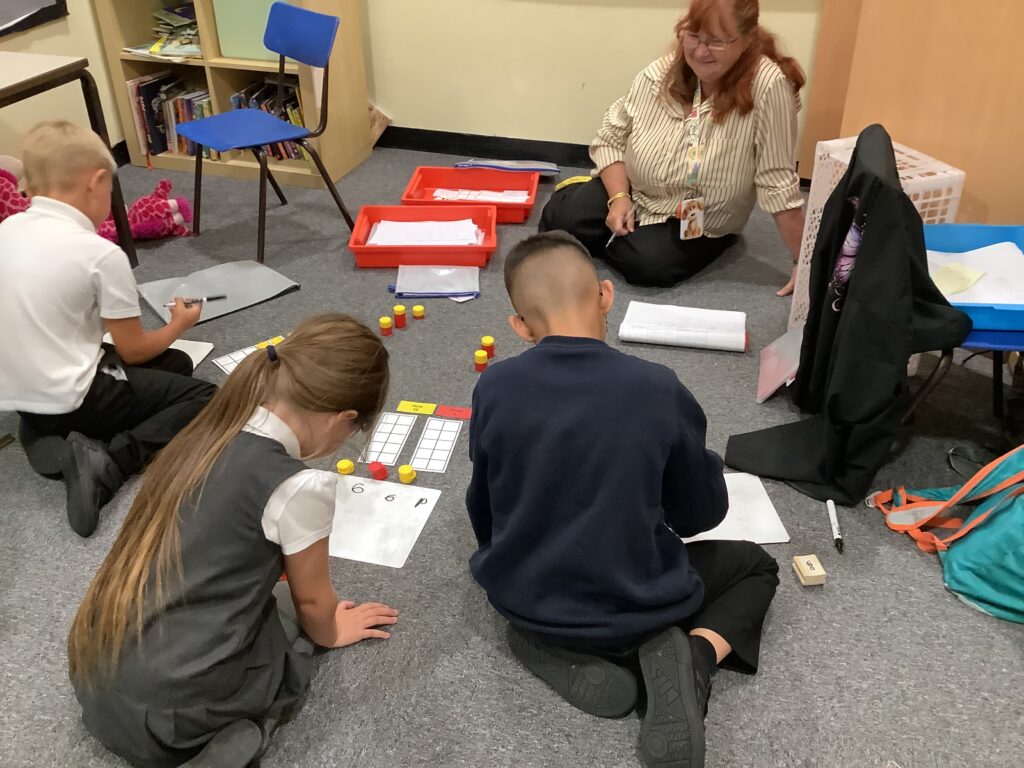
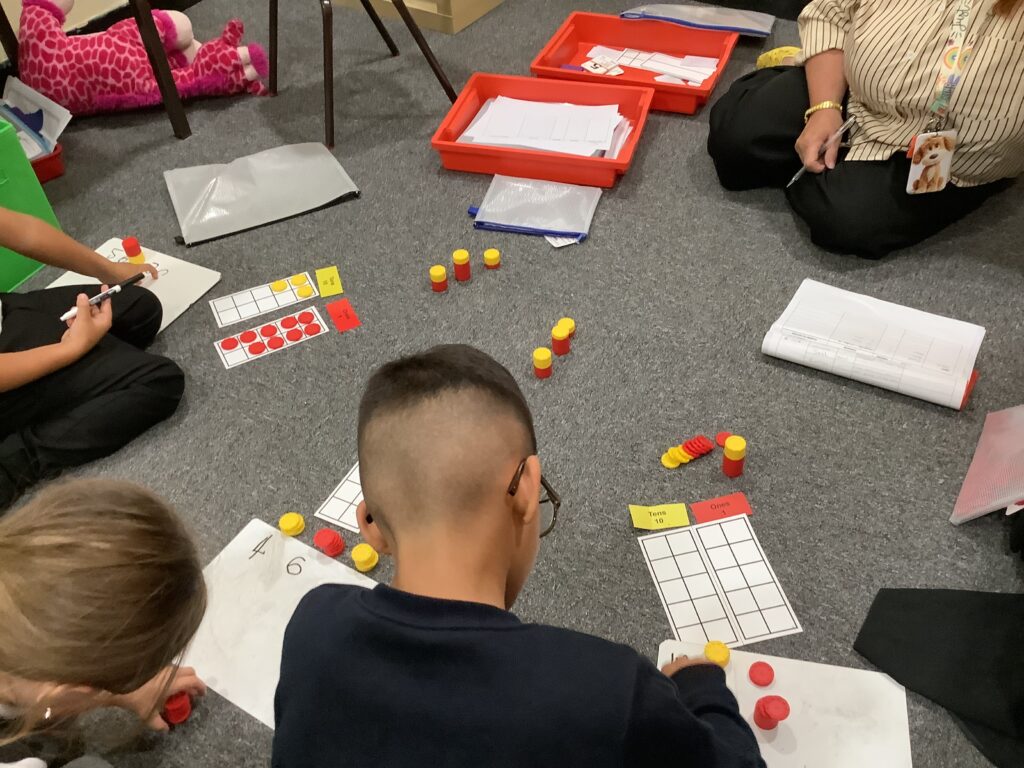
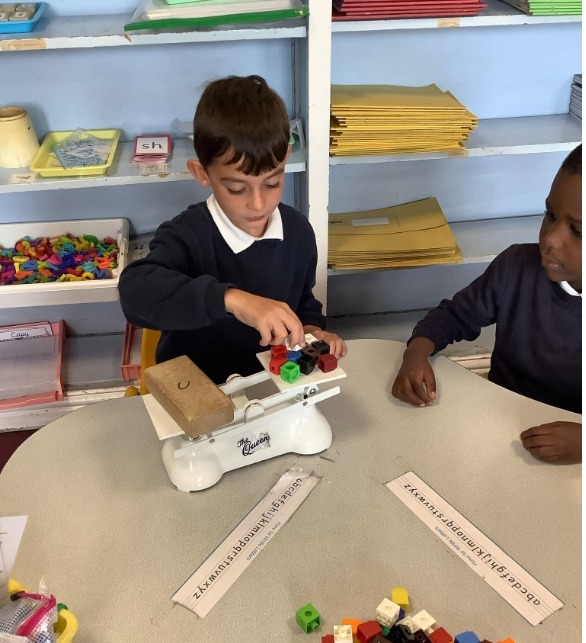
· We use the Concrete–Pictorial–Abstract (CPA) approach to support understanding:
o Concrete: using practical resources and manipulatives
o Pictorial: using visual representations
o Abstract: using numbers and symbols
Supporting Understanding
· Teachers use diagnostic questioning, mini quizzes, Do Nows and maths meetings to assess understanding and address misconceptions quickly
· Prior learning is regularly revisited to ensure knowledge is embedded in long-term memory
· A consistent Calculation Policy supports progression in written methods across all year groups
Mathematical Language and Communication
· New vocabulary is introduced daily and displayed on working walls
· Teachers model clear explanations using sentence stems
· Pupils are expected to explain their thinking using full sentences
· Talk tasks are embedded in lessons to develop reasoning and discussion skills
Early Mathematics and Fluency
· In EYFS and Key Stage 1, pupils take part in Mastering Number sessions to build strong early number sense
· Pupils use Numbots to practise basic skills and increase fluency
· From Year 2 to Year 6, children learn multiplication and division facts through a structured times table approach (Number Sense programme)
Challenge and Support
· All children are supported to succeed through scaffolding and targeted intervention
· Pupils who grasp concepts quickly are challenged through depth tasks and broader applications
· A range of high-quality resources support teaching, including White Rose Maths, Power Maths, NCETM and Maths Mastery materials
Impact
By the time children leave our primary school, they are confident, capable and enthusiastic mathematicians.
Our pupils:
· Develop a positive “can do” attitude and resilience when solving problems
· Become fluent in arithmetic and times tables
· Make strong progress from their individual starting points
They are able to:
· Explain and justify their reasoning clearly using mathematical language
· Move confidently between different representations (concrete, pictorial and abstract)
· Recognise patterns and relationships in mathematics
· Apply their knowledge to solve real-life problems and unfamiliar situations
· Select efficient strategies and methods independently
Children also:
· Use their mathematical skills across the curriculum to support wider learning
· Understand the importance of mathematics in everyday life and future opportunities
Ultimately, our pupils leave with a secure mathematical foundation, ready for the next stage of their education and equipped with skills that will support them throughout their lives.